The bacterial monitoring AAS volunteers do, looks for the presence of E. coli, a fecal coliform (colony-forming) bacteria that lives harmlessly in the intestines of mammals. E. coli discovered in our creek is directly attributed to the waste of animals and its presence in our creek is potential indicator that pathogens may also be present.
Common sources of bacterial contamination are storm water runoff, pets or wildlife’s waste, sewage overflows or leaky sewage pipes.
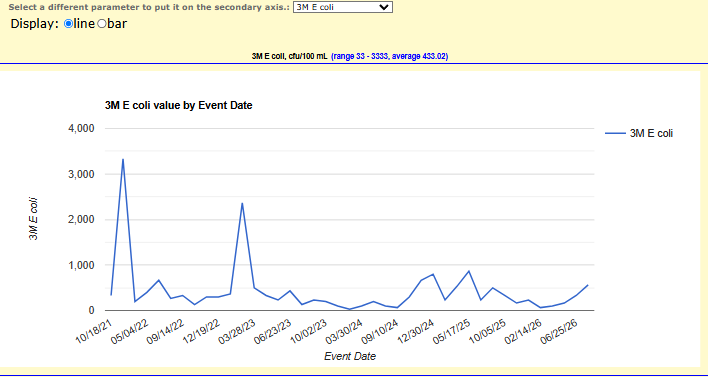
The E.coli results are reported in colony forming units (CFU) per milliliter(mL). There is no “normal” value per se but counts under 410 CFU/mL are considered safe per EPA recommendations. Counts above 410 but less than 1,000 CFU/mL are considered significant and should be monitored closely to determine if there is an actual source of contamination or the high count was transient, such as after a storm or when the water was tested after dog waste was introduced. And counts over 1,000 CFU/mL are retested and reported to AAS local coordinators and Watershed management.
When viewing the data on the AAS website, you’ll see a graph below the data table how the E.coli counts have varied over time.